If you are building a home, upgrading your electrical service, installing an EV charger, adding a standby generator, or planning solar, you may hear your electrician mention an exterior service disconnect.
The terminology can be confusing because the National Electrical Code is changing how it organizes the requirement. The important point for Northern Virginia homeowners is straightforward: new and modified residential services generally need a readily accessible outdoor emergency shutoff.
There is also an important timing distinction. Virginia is currently enforcing the 2021 Virginia Uniform Statewide Building Code, which references the 2020 National Electrical Code (NEC). Under that code, the requirement is found in NEC 230.85. The future 2026 NEC deletes Section 230.85 and moves the substance of the requirement into revised Section 230.70.
What Is an Exterior Service Disconnect?
An exterior service disconnect is a main shutoff installed outside the home, usually near the electric meter. It allows first responders, utility personnel, and electricians to disconnect power without entering the dwelling.
Depending on the design, it may be:
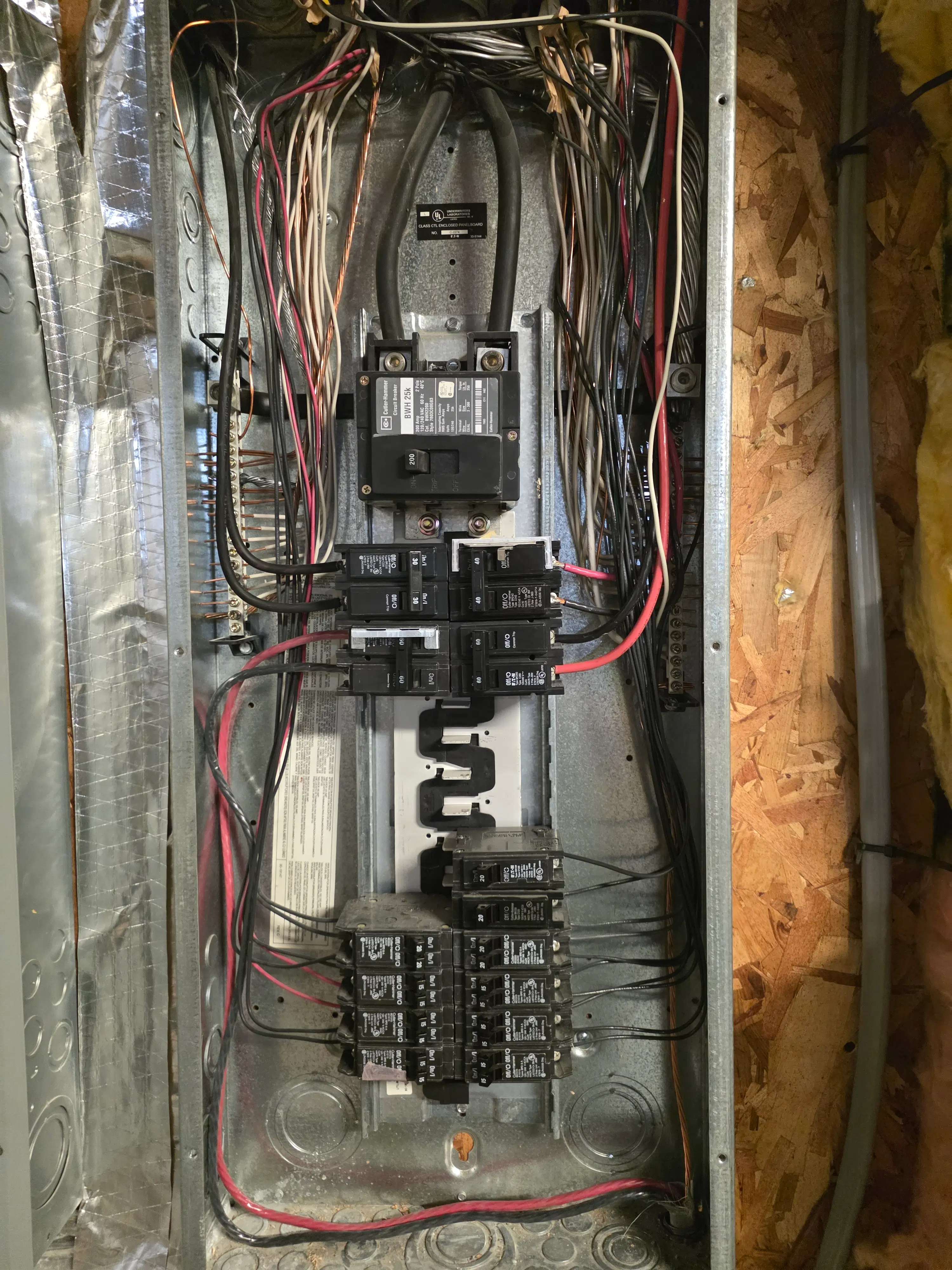
- A meter-main combination panel
- A listed outdoor service disconnect
- An exterior main breaker feeding an interior distribution panel
- A grouped set of service disconnects serving the dwelling
The equipment must be suitable for outdoor use, properly rated, readily accessible, and clearly identified. It is not the same as simply turning off a branch-circuit breaker for an appliance or EV charger.
What NEC 230.85 Requires in Virginia
The 2020 NEC introduced Section 230.85, which requires an emergency disconnect for one- and two-family dwelling services. Virginia incorporated this requirement through the 2021 USBC and the Virginia Residential Code.
In general, the emergency disconnect must be:
- Located outdoors
- Readily accessible
- On the dwelling or within sight of the dwelling
- Clearly marked as an emergency disconnect
- Rated for the available fault current and service conditions
- Installed in a weather-resistant enclosure where exposed to the elements
The Virginia Department of Housing and Community Development provides information about the statewide code framework. Local building departments enforce that statewide code in communities such as Ashburn, Leesburg, Aldie, Sterling, South Riding, Fairfax, Chantilly, Centreville, Gainesville, Haymarket, Manassas, and Warrenton.
What Changes in the 2026 NEC?
The 2026 NEC changes the organization rather than eliminating the safety concept.
Section 230.85 is deleted, and the exterior emergency-disconnect requirements are incorporated into revised Section 230.70, which governs service disconnecting means. For one- and two-family dwellings, the service disconnect must be installed outdoors in a readily accessible location, on or within sight of the home.
That means the exterior service disconnect becomes the primary service shutoff and the emergency disconnect. The future code also strengthens identification requirements, including durable markings such as “Emergency Disconnect” and “Service Disconnect.”
However, homeowners should not assume that the 2026 NEC is already enforceable in Northern Virginia. As of 2026, Virginia’s current statewide electrical standard remains the 2020 NEC through the 2021 USBC. Always confirm the code edition and local interpretation with the authority having jurisdiction, or AHJ, for your permit.
Why Exterior Disconnects Matter
The requirement exists for practical safety reasons.
Firefighter Safety
During a structure fire, responders need a dependable way to remove electrical power quickly. An exterior disconnect can reduce the need to enter a potentially dangerous building to find the interior panel.
It also helps responders identify whether the dwelling is still energized before beginning overhaul, ventilation, or rescue operations.
Electrical Worker Safety
Electricians may need to work on service equipment, panelboards, generators, or EV charging circuits. A clearly identified exterior service disconnect provides a controlled point for shutting down the dwelling’s electrical service.
Faster Emergency Response
A visible outdoor disconnect reduces delays during an electrical emergency, storm event, fire, or service-equipment failure. It also creates a more consistent layout for future electricians and utility personnel.
Does the Rule Apply to Your Home?
New Construction
New homes and many new dwelling services must include an exterior emergency disconnect. The design is normally coordinated with the meter location, utility requirements, grounding and bonding, and the interior panel layout.
For a new home in Loudoun, Fairfax, Prince William, or Fauquier County, the disconnect should be included in the electrical plans rather than added as an afterthought.
Existing Homes
An existing home that was legally installed under an earlier code edition is not automatically required to be rebuilt solely because the code has changed. Existing electrical systems are generally evaluated based on the code in effect when they were installed, unless a specific project triggers current-code requirements.
Service Upgrades and Panel Replacements
Exterior disconnect requirements commonly become relevant when you:
- Upgrade from a 100-amp to a 200-amp service
- Replace the service equipment
- Relocate the meter or main panel
- Replace service-entrance conductors
- Add a new service for an addition or major renovation
- Perform a panel “heavy-up” to support new electrical loads
A routine interior breaker replacement is different from replacing the service equipment. The exact trigger depends on the project scope and the AHJ’s interpretation.
EV Charger Installations
Adding a Level 2 home EV charging station does not automatically mean you need to install a new exterior service disconnect.
If your existing service has adequate capacity and the electrician installs a permitted, dedicated EV circuit without replacing or modifying the service equipment, the exterior service disconnect may not be triggered solely by the charger.
A service upgrade may be necessary when the load calculation shows that the existing service cannot support the charger along with the home’s HVAC system, electric range, heat pump, water heater, hot tub, or other major loads.
When the EV project includes a service upgrade or replacement of the service equipment, the exterior emergency disconnect generally becomes part of that work.
How Installation Usually Works
A licensed electrician begins with a site assessment and load calculation. The design must account for the home’s existing demand and planned loads, not just the amperage printed on the charger.
Common design options include:
- Installing a meter-main combination enclosure outside
- Adding a separate outdoor service disconnect ahead of the interior panel
- Relocating an interior service panel when necessary
- Installing new service conductors in conduit
- Updating grounding and bonding
- Coordinating the disconnect location with Dominion Energy or NOVEC
- Adding separate disconnects for generators, solar equipment, or battery storage
A straightforward disconnect addition may cost approximately $1,500 to $4,000, while a complete service upgrade can commonly reach $4,000 to $10,000 or more in Northern Virginia. These are planning ranges, not fixed prices. Trenching, masonry, utility coordination, panel relocation, difficult access, structural repairs, and service size all affect the final cost.
Clean workmanship matters. The best installation protects siding, brick, drywall, landscaping, and finished garage surfaces wherever possible. Any required openings should be planned, neatly sealed, and repaired rather than left as an unfinished part of the project.
How the Disconnect Interacts With EV Chargers, Generators, and Solar
An exterior service disconnect does not automatically replace every other disconnect in the electrical system.
EV Charging
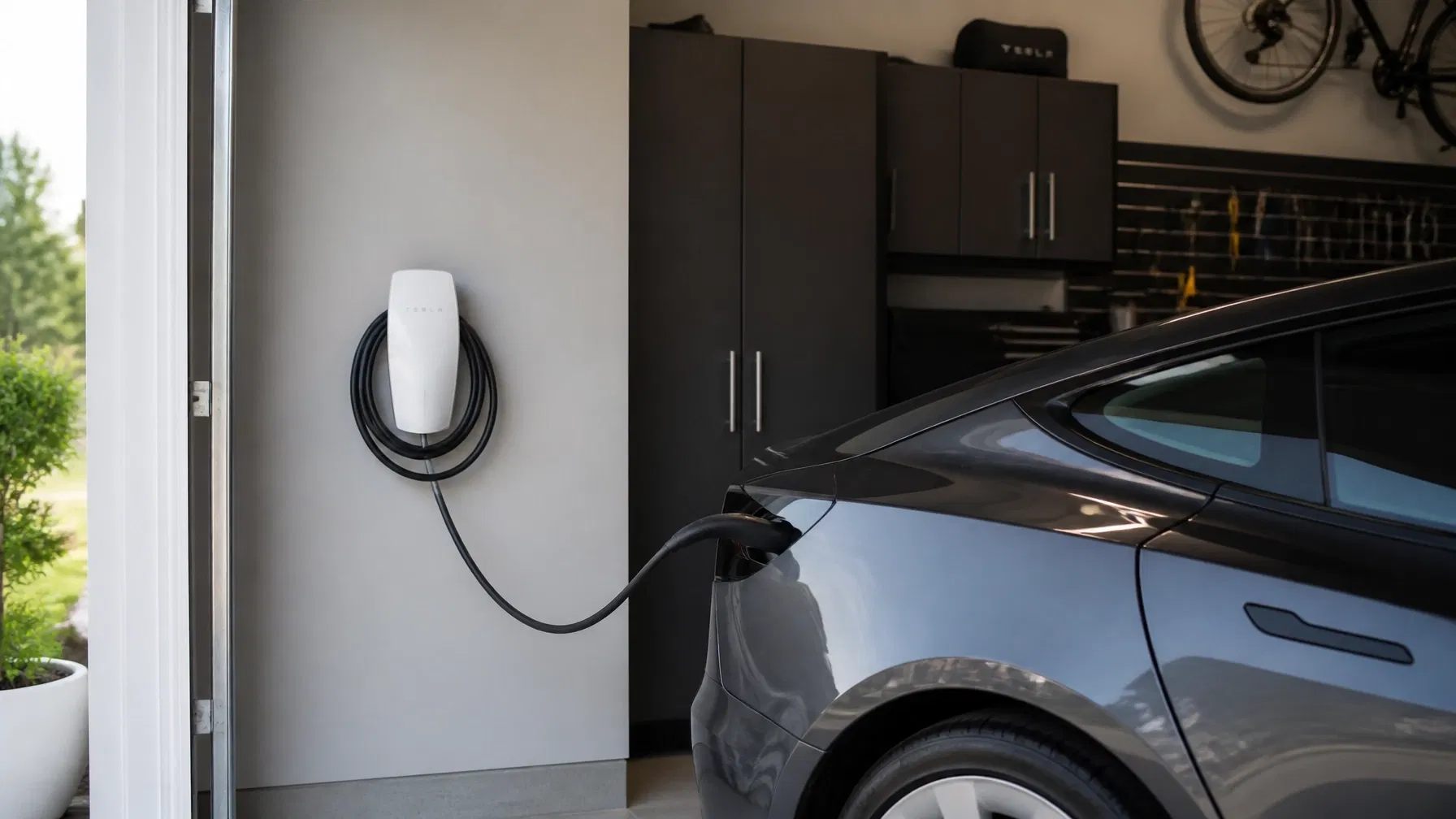
A home EV charging station still requires proper equipment disconnecting means, circuit protection, conductor sizing, and load management. A hardwired Level 2 charger is often preferable to a plug-in connection when practical because it reduces plug and receptacle wear and creates a more permanent installation.
Auto Charge Pros evaluates whether the home can support the charging load before recommending a charger, panel upgrade, or load-management system.
Generators
A generator has its own transfer equipment and disconnecting requirements. The exterior service disconnect must be coordinated with the transfer switch so the generator cannot backfeed the utility system.
Solar and Battery Storage
Solar arrays, inverters, and battery systems can continue producing or storing energy even when utility power is disconnected. They may require additional, clearly labeled disconnects and emergency-shutdown equipment.
Do not assume that turning off the main service disconnect makes every energy source in the home safe. The electrician must evaluate the complete system.
Permits and Inspections in Northern Virginia
Exterior service disconnect work is permitted electrical work. The permit scope may include a service change, panel replacement, new service, generator connection, or EV charger installation.
During inspection, the AHJ may review:
- Disconnect location and accessibility
- Required markings and labeling
- Service conductor routing
- Grounding and bonding
- Equipment ratings
- Weatherproofing and enclosure type
- Meter and utility clearances
- Load calculations
- EV charger circuit and protection
- Generator or solar interconnection
- Final panel directories and identification
Loudoun County, Fairfax County, Prince William County, and Fauquier County each administer their own permit processes while enforcing the Virginia statewide code. Review the Fairfax County residential electrical permit information, Loudoun County construction resources, Prince William County residential EV guidance, or Fauquier County residential trade requirements for jurisdiction-specific procedures.
Questions to Ask Your Electrician
Before approving the work, ask:
- Does my project trigger the exterior emergency-disconnect requirement?
- Is my existing service equipment compliant for the planned work?
- Will the project require a meter-main combination panel or a separate disconnect?
- Does my EV charger require a service upgrade or load-management system?
- Will Dominion Energy or NOVEC need to disconnect or reconnect service?
- Are generator, solar, or battery disconnects part of the design?
- Who will pull the permits and schedule inspections?
- How will the installation protect drywall, siding, brick, and landscaping?
- What labels will be installed for first responders?
- What future capacity will remain for another EV charger or major appliance?
FAQ
Is an outdoor disconnect required for every existing home?
No. An existing, legally compliant home is not necessarily required to undergo a full retrofit. New services, service replacements, and major service upgrades are the situations most likely to trigger current requirements.
Does installing a Tesla Wall Connector require an exterior service disconnect?
Not automatically. A charger-only installation on an existing service may not trigger the residential service-disconnect requirement. If the installation requires replacing or upgrading the service equipment, the answer may change.
Is the 2026 NEC already law in Virginia?
No. Virginia currently enforces the 2021 USBC and 2020 NEC statewide. The 2026 NEC is important for future planning, but the AHJ determines the code requirements for your current permit.
Can the exterior disconnect be installed on a detached garage?
Possibly, depending on the service arrangement, visibility, accessibility, and applicable code provisions. A detached garage may have a feeder disconnect rather than a service disconnect. The design must be reviewed as part of the complete electrical system.
Should I add an exterior disconnect even if it is not required?
It may be a reasonable safety and future-planning decision, particularly when renovating or preparing for an EV charger, generator, solar system, or service upgrade. The installation should still be designed and permitted correctly.
Plan Your Project With Code Compliance in Mind
An exterior service disconnect is more than a box mounted beside the meter. It is part of the home’s service design, emergency-safety strategy, and future electrical capacity.
Whether you need a licensed electrician in Fairfax, VA, a service assessment in Loudoun County, or EV charger installation in Northern Virginia, Auto Charge Pros can evaluate the load, explain your options, manage permits and inspections, and complete the work with clean workmanship.
For residential electrical services or a professional home EV charging station installation, contact Auto Charge Pros to discuss your project.