
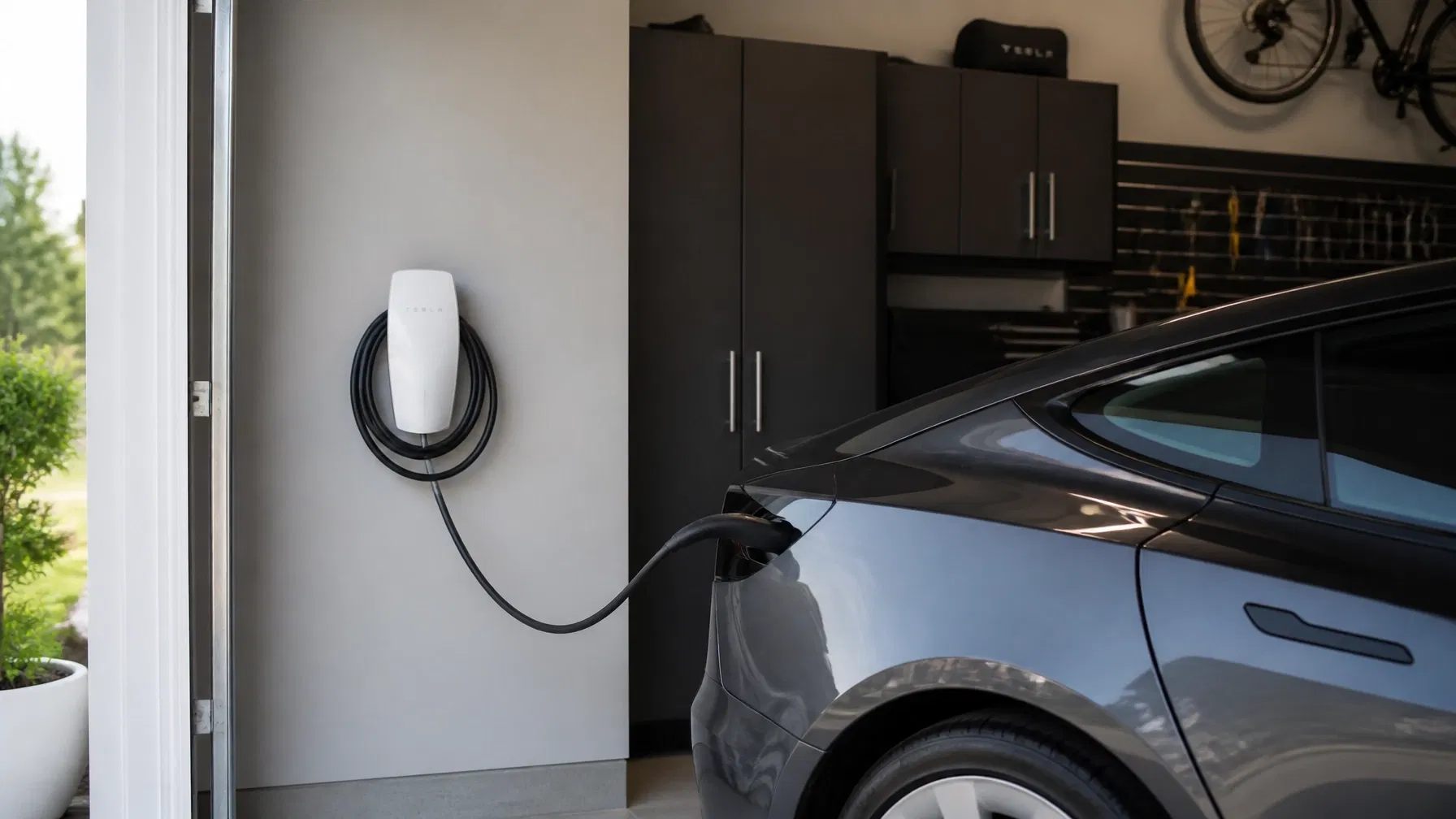
A detached garage makes an EV charging project more involved, but it does not make reliable home charging impractical. The key difference is that power must travel from the house to a separate structure before it reaches the charger.
That may involve an underground feeder, a new trench, a garage subpanel, grounding electrodes, and county inspections. The right installation depends on the distance between buildings, existing wiring, soil conditions, charger output, and what else you plan to use in the garage.
This guide explains the main options for homeowners in Ashburn, Leesburg, Aldie, Sterling, South Riding, Fairfax, Chantilly, Centreville, Gainesville, Haymarket, Manassas, and Warrenton.
Why a Detached Garage Requires More Planning
An attached garage usually shares the home’s electrical system and may have a relatively direct wiring route from the main panel. A detached garage is a separate structure. It may have:
- No electrical service at all
- An older feeder sized only for lights and general outlets
- An undersized panel
- A long or difficult path between the house and garage
- Landscaping, driveways, retaining walls, or irrigation lines in the way
A new Level 2 charger typically requires a dedicated 240-volt circuit. In a detached garage, that circuit must either run all the way from the home’s electrical panel or be supplied by a properly sized feeder and subpanel in the garage.
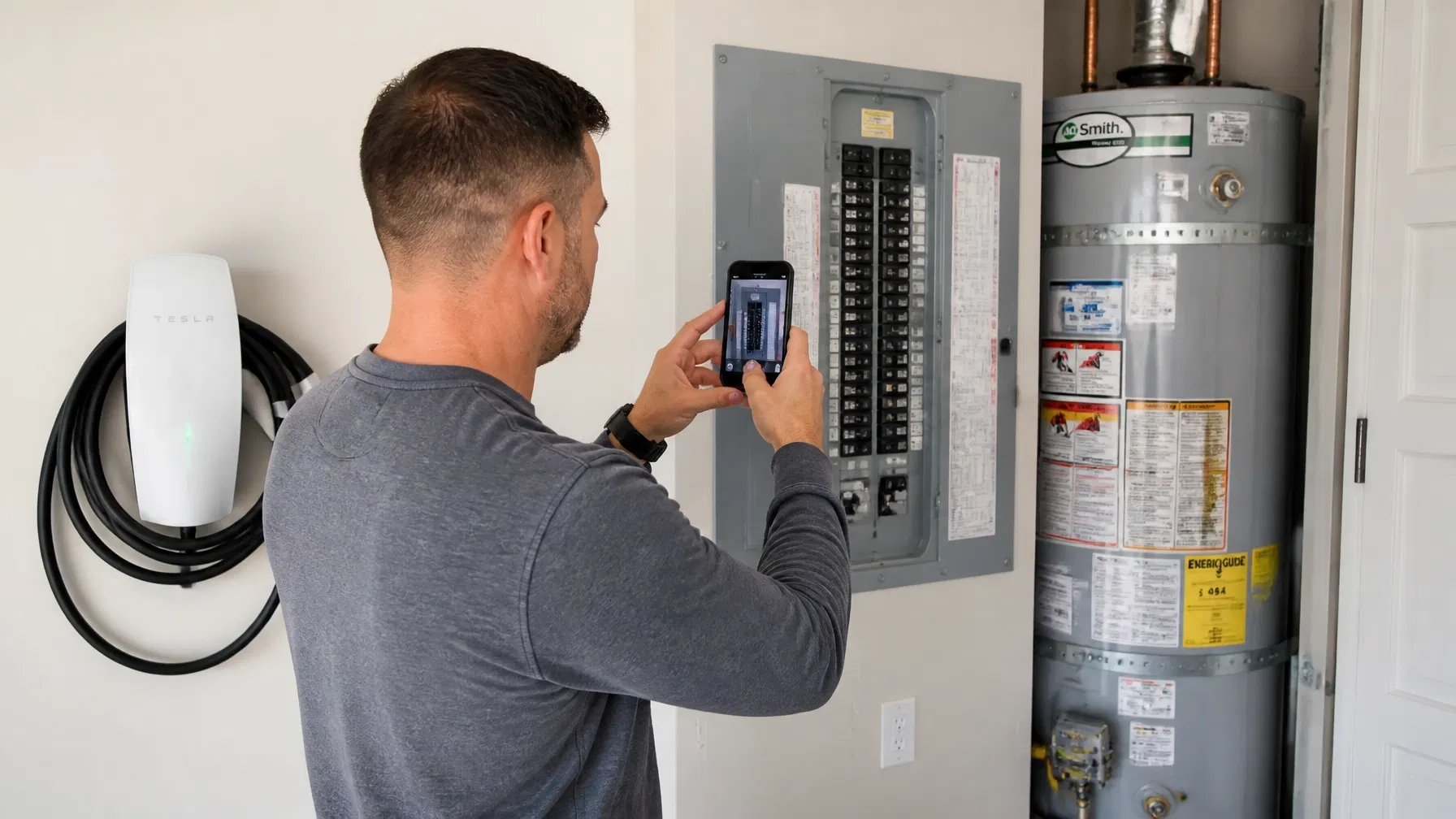
Before choosing equipment, a licensed electrician should inspect the existing system and complete a load calculation. This confirms whether the home can support the charger without overloading the service.
The Main Ways to Bring Power to the Garage
Underground Feeder in a Trench
An underground run is often the cleanest and most attractive option. The wiring travels from the house to the detached garage through buried cable or conduit.
UF-B cable may be permitted for certain underground applications, but the cable must be correctly sized, rated, protected, and installed at the required depth. Direct-burial cable is also more difficult to replace if your charging needs increase later.
For many detached-garage installations, electricians prefer a raceway with conductors rated for wet locations. This allows the wiring to be pulled through conduit and makes future upgrades more manageable.
Conduit With Individual THHN/THWN-2 Conductors
Individual conductors in PVC conduit are commonly used for longer or higher-amperage runs. The conductors must be rated for the conditions inside the raceway, which is considered a wet location underground. That generally means using conductors with the appropriate THWN or THWN-2 rating.
Schedule 40 PVC is commonly used underground, while Schedule 80 PVC is typically used where the conduit is exposed or subject to physical damage. The electrician must also account for:
- Conduit size
- Conductor ampacity
- Voltage drop over long distances
- Expansion and contraction
- Sweep locations entering each structure
- Protection at walls and equipment
Overhead Feeder
An overhead feeder can make sense when the garage is far from the home, the property has extensive rock, or trenching would require crossing a complicated driveway or hardscape.
However, overhead wiring requires properly supported conductors, suitable clearances, weather-rated equipment, and careful attachment to both structures. It may also be less visually appealing than an underground installation.
An overhead option should be evaluated during the site visit rather than assumed to be a shortcut.
Using Existing Garage Wiring
Some detached garages already have power. That does not necessarily mean the existing wiring can support an EV charger.
The electrician needs to verify:
- Feeder size and conductor material
- Breaker rating
- Garage panel capacity
- Whether the neutral and equipment grounding conductors are correctly configured
- Existing lighting, receptacles, tools, and other loads
- Whether the feeder is damaged, obsolete, or improperly installed
A garage circuit that supports lights and a few receptacles may not have enough capacity for a 40- or 48-amp Level 2 charger.
Subpanel or Direct Charger Circuit?
When a Direct Circuit Makes Sense
A dedicated circuit from the house panel to the charger may be appropriate when the detached garage only needs one EV charger and its existing lighting or general-purpose wiring is already separate.
This approach can reduce equipment and installation complexity. It may be practical for a shorter run with an accessible trench route.
The charger should generally be hardwired when practical, especially for higher-powered residential charging. Hardwiring avoids dependence on a receptacle, reduces connection points, and can provide a clean finished appearance.
When a Garage Subpanel Is the Better Choice
A subpanel is usually the more flexible design when the detached garage will support several loads, such as:
- A Level 2 charger
- General-purpose receptacles
- Lighting
- Garage-door equipment
- Workshop tools
- A refrigerator or freezer
- A future second EV charger
Instead of running several separate circuits from the house, the electrician installs a properly sized feeder to the detached garage. The subpanel then distributes power locally.
A subpanel also makes future maintenance and expansion easier. The feeder still must be sized using a load calculation. Installing a large panel does not automatically create more available capacity at the home’s main service.
Electrical Requirements for a Detached-Garage EV Charger
A typical installation includes the following:
- A dedicated circuit for the EV charger
- A properly sized 240-volt breaker
- Conductors sized for the charger and run length
- Load calculation under the applicable NEC requirements
- Required overcurrent protection
- GFCI protection where required by the charger and installation method
- A disconnecting means for the detached structure or equipment, as applicable
- Correct separation of neutral and equipment grounding conductors in the garage subpanel
- A grounding electrode system at the detached garage when required
EV charging is a continuous load. The circuit is generally sized at 125% of the charger’s maximum continuous output.
For example:
- A charger delivering 40 amps typically requires a 50-amp circuit
- A charger delivering 48 amps typically requires a 60-amp circuit
The final breaker and conductor sizes depend on the equipment instructions, installation conditions, conductor material, temperature ratings, and voltage drop.
A detached building supplied by a feeder or branch circuit may also require one or more ground rods or another approved grounding electrode system. The neutral and equipment grounding conductors must be handled correctly at the garage. This is an area where a licensed electrician’s design and inspection-ready workmanship matter.
Trenching and Burial Depth
For a typical underground residential electrical run, homeowners should expect a trench in the approximate range of 18 to 24 inches of cover. The exact depth depends on the wiring method, conduit type, location, local requirements, and any applicable NEC exceptions.
Direct-burial cable may require more cover than conductors installed in approved underground conduit. Runs beneath driveways or areas subject to vehicle traffic may have additional requirements.
Before digging, the project should account for:
- Utility locating through Virginia 811
- Driveways and walkways
- Sprinkler lines
- Drainage systems
- Tree roots
- Retaining walls
- Existing communication lines
- Landscaping and irrigation controls
A clean trench plan can reduce restoration work. The electrician should also explain whether the quote includes backfilling, surface repair, conduit installation, and cleanup.
Permits and Inspections in Northern Virginia
A new feeder, new 240-volt circuit, hardwired charger, or garage subpanel will generally require an electrical permit and inspection.
The permitting authority depends on the property location:
- Loudoun County, including Ashburn, Leesburg, Aldie, Sterling, and South Riding
- Fairfax County, including Fairfax, Chantilly, and Centreville
- Prince William County, including Gainesville, Haymarket, and Manassas
- Fauquier County, including Warrenton
The inspector may review the trench before it is covered. The final inspection can include:
- Burial depth and conduit protection
- Feeder conductors and terminations
- Breaker sizing
- Panel labeling
- Disconnecting means
- Grounding and bonding
- Neutral isolation at the detached-building subpanel
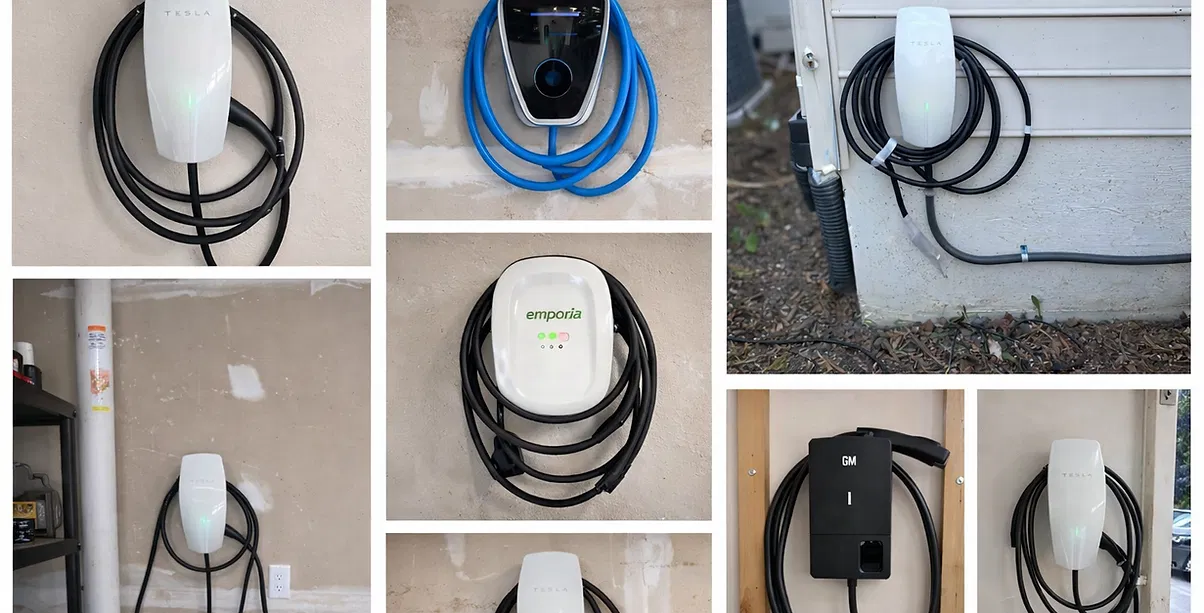
- Charger mounting and wiring
- Required clearances and protection
Auto Charge Pros handles the permit and inspection process as part of a full-service EV charger installation in Northern Virginia, so the homeowner does not have to coordinate each step independently.
What Does a Detached-Garage Installation Cost?
Detached-garage projects vary more than standard garage installations. The major cost factors include trench length, soil, conduit size, panel capacity, restoration work, and whether a subpanel is needed.
Cost will vary based on factors such as:
- Trench length and burial depth
- Soil conditions, rock, and excavation difficulty
- Driveway, walkway, patio, or other hardscape crossings
- Conduit size, conductor sizing, and total run length
- Whether a garage subpanel is required
- Main panel capacity and whether load-management equipment is needed
- The charger hardware selected
- Restoration work, surface repair, and cleanup
- Permit and inspection fees
A site visit is necessary to provide an honest price.
Planning Tips Before Installation
Choose the Charger Location Carefully
Mount the charger close enough to the vehicle’s charge port that the cable reaches without crossing a walking path. Keep the unit protected from vehicle impact, shelving, doors, and workshop equipment.
Plan for Future Loads
If you may add a second EV, tools, or a workshop circuit, discuss those plans before the trench is closed. Installing a larger raceway or planning a subpanel at the beginning may be more economical than reopening the ground later.
Ask About Load Management
If the home’s service has limited capacity, a charger with load management may allow safe charging without an unnecessary service upgrade. The equipment must be compatible with the electrical design and installed according to its instructions.
Use a Licensed Electrician
A detached-garage EV installation combines high-amperage charging, underground wiring, structural separation, grounding, permitting, and excavation. A qualified professional can coordinate these requirements and minimize unnecessary drywall or landscaping damage.
Whether you are searching for a licensed electrician Fairfax VA, EV charging station installers near me, or a Level 2 charger installer Ashburn, ask for a written scope that identifies the feeder method, trench depth, charger circuit, permit responsibilities, and cleanup.
Frequently Asked Questions
Can I run an extension cord to a detached garage for EV charging?
No. Extension cords are not a safe or code-compliant substitute for a properly installed EV charging circuit. They can overheat, suffer physical damage, and create connection problems.
Do I need a subpanel in my detached garage?
Not always. A direct dedicated circuit may be sufficient if the charger is the only significant new load. A subpanel is usually better when the garage needs several circuits or may support a second EV in the future.
Is a NEMA 14-50 outlet appropriate in a detached garage?
It can be appropriate when correctly installed and protected, but hardwired charging is often preferred for higher-powered residential use. The receptacle must be rated for continuous EV charging, installed in an approved box, and protected as required.
How long does the project take?
A straightforward installation may take one day after permitting and scheduling. Trenching, inspection timing, driveway work, rocky soil, or subpanel installation can extend the project.
Will trenching damage my yard?
Some excavation is unavoidable, but careful routing and clean workmanship can limit the impact. Ask whether the proposal includes backfilling, debris removal, and basic surface restoration.
Can Auto Charge Pros install chargers for Tesla, Rivian, Ford, BMW, Hyundai, and Kia?
Yes. The correct installation depends on the vehicle, charger model, connector, amperage, and home electrical system. Auto Charge Pros installs residential charging solutions for a wide range of EVs.
Get a Proper Plan for Your Detached Garage
A detached garage can support fast, dependable overnight charging when the electrical run is designed correctly. The right plan accounts for the charger, trench, feeder, subpanel, grounding, permits, inspections, and future use of the garage.
For a professional evaluation, visit Auto Charge Pros’ residential EV charging station installation service or contact the team. Auto Charge Pros serves homeowners throughout Loudoun, Fairfax, Prince William, and Fauquier counties with permitted installations, precise load calculations, clean workmanship, and practical recommendations without unnecessary upselling.