
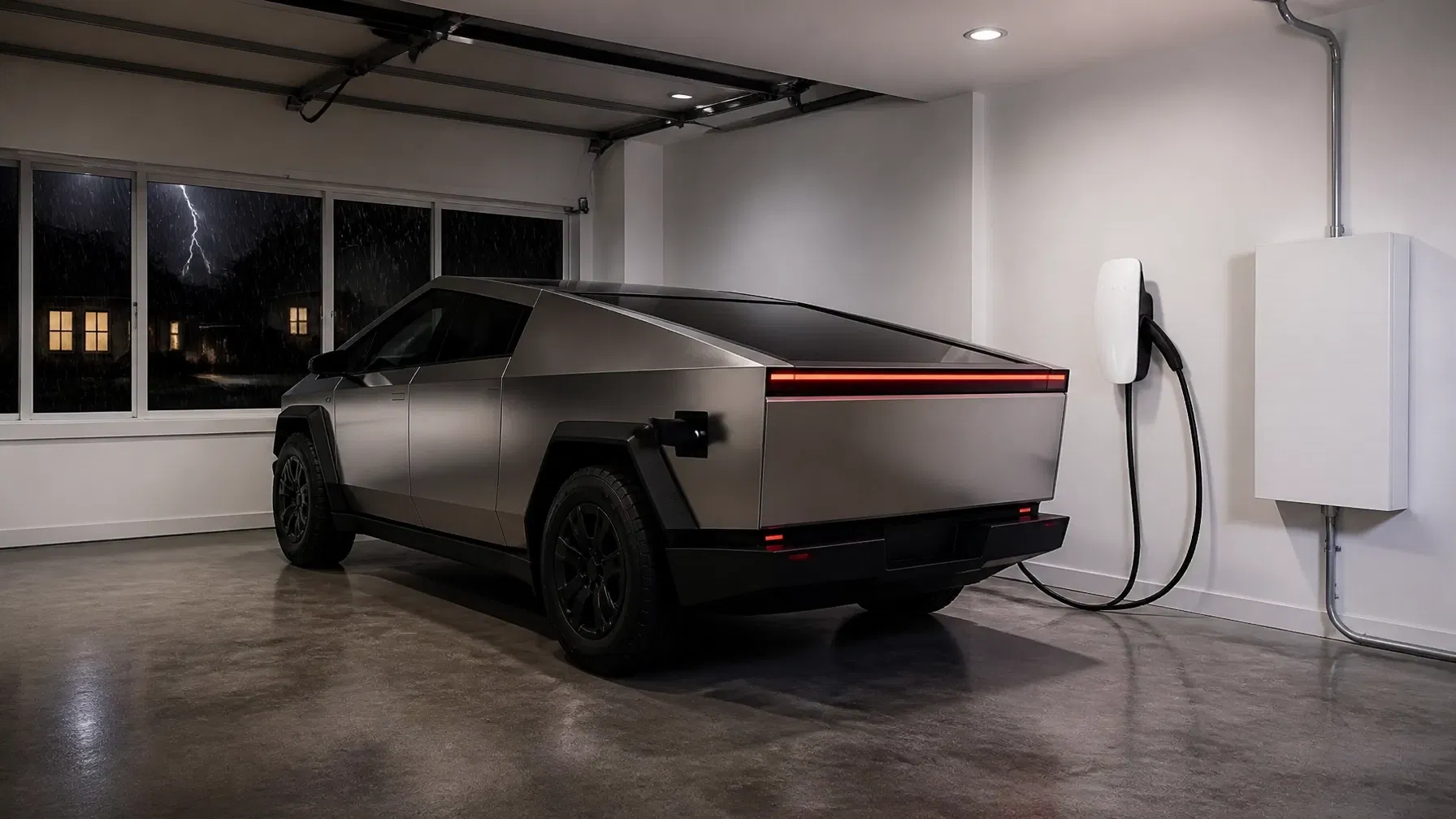
Northern Virginia homeowners know that severe weather can interrupt normal life quickly. Summer thunderstorms can damage utility equipment, while winter ice storms can bring down branches and power lines across Loudoun, Fairfax, Prince William, and Fauquier counties.
For many EV owners, the vehicle has traditionally been viewed as transportation only. Bidirectional charging changes that perspective. With compatible equipment, your EV can become a large battery on wheels that helps keep essential home systems operating during an outage.
The technology is not a universal replacement for every generator or battery system. Vehicle compatibility, charger hardware, electrical design, software, and utility requirements all matter. However, for the right Tesla owner, bidirectional charging can make a home EV charger part of a broader backup-power strategy.
What Is Bidirectional Charging?
Most EV charging is one-way. Electricity flows from your home’s electrical panel through the charger and into the vehicle battery.
Bidirectional charging allows electricity to flow in both directions:
- Vehicle-to-home (V2H): The EV supplies power to the residence.
- Vehicle-to-load (V2L): The EV supplies power to individual appliances or equipment.
- Vehicle-to-grid (V2G): The EV sends power back to the utility grid through an approved program.
In simple terms, the vehicle becomes a mobile energy-storage system. Instead of using the charger only to fill the battery overnight, a compatible system can also draw energy from the battery when the home needs it.
The charger, gateway, transfer equipment, and vehicle must communicate safely. During a utility outage, the home must be isolated from the electrical grid before the vehicle begins supplying power. This prevents dangerous backfeed onto utility lines and is one reason a professional installation is essential.
How Tesla Powershare Works
Tesla refers to its bidirectional backup system as Powershare. As of 2026, Tesla’s official home-backup documentation centers on a compatible Cybertruck, a Tesla Universal Wall Connector, and Powershare electrical equipment such as a Gateway or approved backup switch.
The Main Components
A Tesla Powershare installation may include:
- A compatible Tesla vehicle, currently centered on the Cybertruck for full vehicle-to-home operation
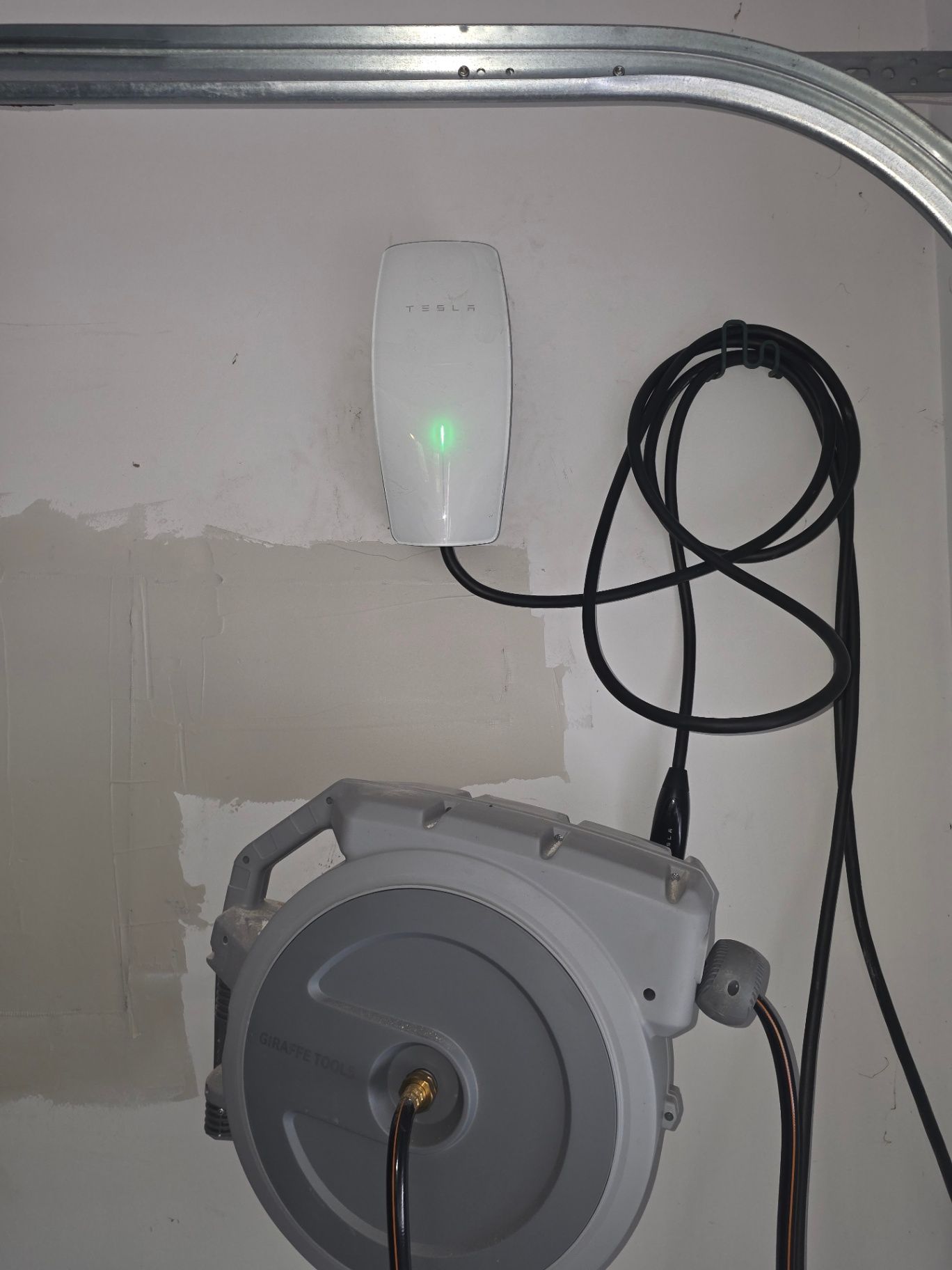
- A Tesla Universal Wall Connector
- A Powershare Gateway or compatible backup-switch equipment
- Dedicated branch-circuit wiring
- A properly sized overcurrent protection device
- Load-management equipment when the home’s demand requires it
- Utility coordination, permits, and inspections where applicable
The Universal Wall Connector is important because not every Tesla charger is designed for bidirectional operation. A standard Tesla Wall Connector may provide excellent Level 2 charging, but it should not automatically be assumed to support vehicle-to-home backup.
Tesla describes the Powershare system as capable of delivering up to approximately 11.5 kW of continuous power under the appropriate configuration. That is enough for many essential home loads, including refrigeration, lighting, internet equipment, security systems, and selected heating or cooling equipment.
Tesla’s Powershare support information and home-backup installation documentation should be reviewed alongside the specific vehicle and equipment specifications.
Why This Matters During a Northern Virginia Outage
A typical EV battery stores substantially more energy than a standard home battery. Depending on the vehicle, a battery pack may hold approximately 75 to 100 kWh.
That does not mean the entire battery is available for household use. You may want to reserve energy for driving, and the system may maintain operating limits to protect the battery. Even so, the available capacity can be significant.
For comparison:
- A refrigerator may use roughly 1–3 kWh per day.
- Lighting, internet, phone charging, and security equipment may use several additional kWh per day.
- A well pump, sump pump, or gas furnace blower adds intermittent demand.
- A home using essential circuits carefully may consume approximately 10–20 kWh per day.
- A fully occupied home with electric cooking, electric water heating, heat pumps, or central air may use 25–40 kWh or more per day.
A 75–100 kWh battery could therefore support essential loads for multiple days, depending on weather, household habits, and the equipment connected to the backup panel.
That distinction matters in Ashburn, Leesburg, Aldie, Sterling, South Riding, Fairfax, Chantilly, and Centreville, where homes can have very different electrical demands. A smaller home with gas heat may have a modest critical-load profile. A larger home in Gainesville, Haymarket, Manassas, or Warrenton may have well pumps, electric heat, multiple refrigerators, and larger HVAC loads.
Bidirectional charging gives you energy capacity. It does not automatically give you unlimited power output.
What It Means for Your Home’s Electrical System
A bidirectional charger is not simply installed by adding a breaker to the panel. The home’s electrical system must be evaluated as a complete design.
Load Calculations Come First
A licensed electrician should review:
- Main service size and available capacity
- Existing major loads
- HVAC and heat-pump demand
- Electric water heating and cooking
- Well pumps, sump pumps, and garage equipment
- The proposed charger output
- Backup circuits and expected simultaneous loads
- Whether load management is appropriate
Load management may allow the system to reduce or temporarily disconnect selected loads so the vehicle can safely supply the circuits that matter most.
Gateway and Transfer Equipment
The home also needs equipment that can detect a utility outage and disconnect the residence from the grid. Depending on the system, this may be a gateway, backup switch, transfer device, or related manufacturer-approved equipment.
This isolation is a safety requirement. A vehicle cannot safely power a home while that home remains connected to energized utility lines.
Dominion Energy and NOVEC customers should also confirm local requirements with the installer and utility. Backup systems that remain behind the meter are different from systems designed to export power to the grid. Vehicle-to-grid participation may require separate utility approval, communications equipment, and program enrollment.
Clean Installation Matters
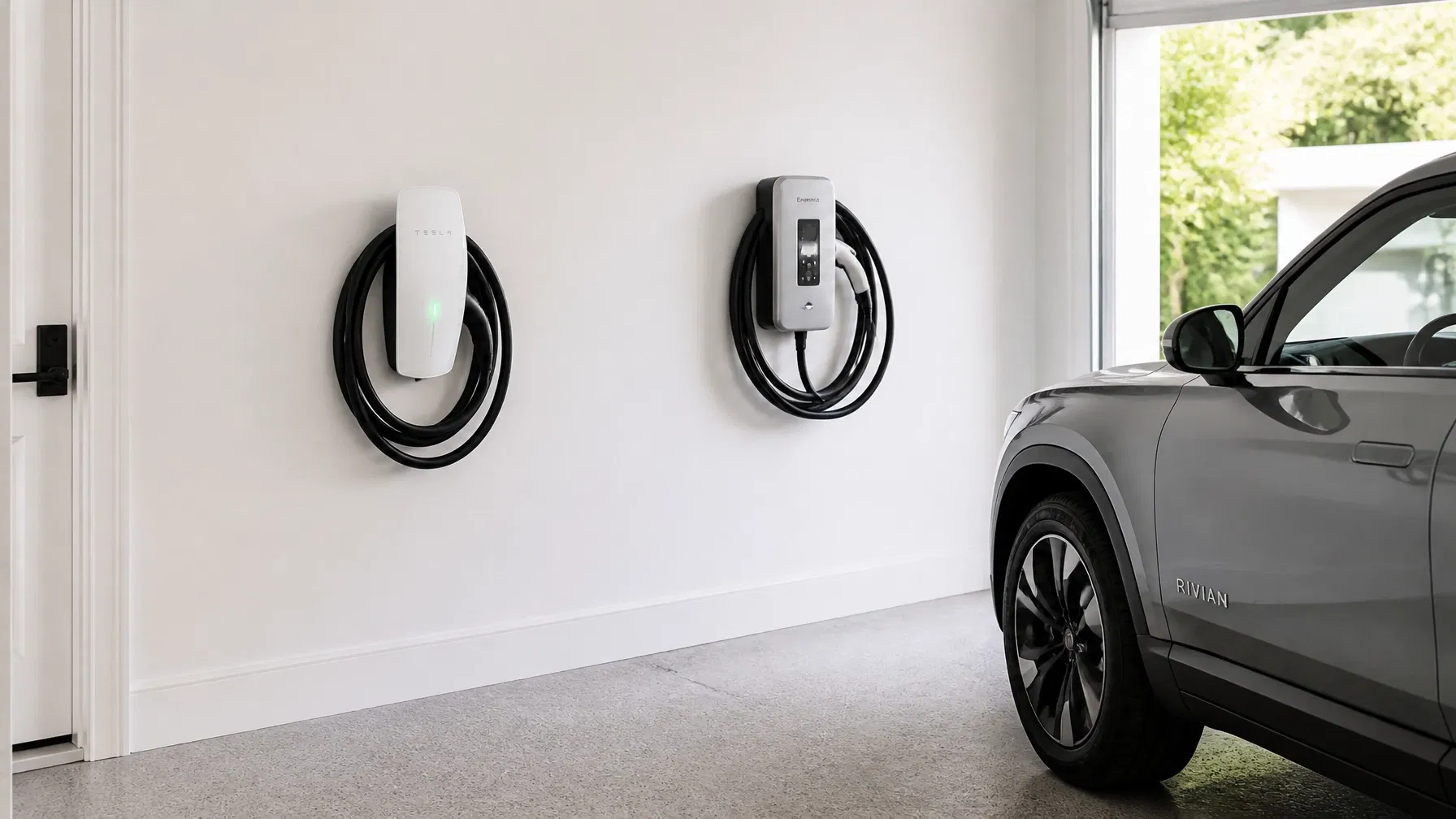
A Tesla Wall Connector installation in Virginia should be hardwired whenever practical for higher-powered residential charging. Hardwiring can provide a secure, durable connection and avoids relying on a frequently used receptacle for continuous high-current charging.
A professional EV charger installation in Northern Virginia should also include:
- Proper conduit routing
- Secure cable management
- Weather-appropriate equipment placement
- Accurate breaker and conductor sizing
- Permit handling
- Inspection coordination
- Careful drywall and trim work
- Job-site cleanup
The cost of this work depends on the distance and routing from the electrical panel to the charger, whether walls are finished or unfinished, whether the equipment is mounted indoors or outdoors, whether trenching or hardscape crossings are required, the home’s service capacity and any load-management or service work needed, the bidirectional gateway or backup equipment selected, permit and inspection fees, and the home’s existing electrical condition. The only accurate way to price the work is through an on-site evaluation of the actual property.
Bidirectional Charging vs. a Generator vs. a Home Battery
Each backup option has practical advantages.
Bidirectional EV Charging
Advantages:
- Uses a battery you may already own
- Offers substantial energy capacity
- Produces no on-site combustion emissions
- Can operate quietly
- May integrate with a broader Tesla energy system
Limitations:
- Requires a compatible vehicle and charger
- The vehicle must be home and connected
- Software and product availability can change
- Vehicle energy may be needed for transportation
- Higher-powered loads may still need to be managed
Portable or Standby Generator
Advantages:
- Can operate as long as fuel is available
- Does not depend on an EV’s state of charge
- Works with many existing home-backup designs
Limitations:
- Requires fuel, maintenance, and safe ventilation
- Portable units can be noisy
- Manual connection and load management may be required
- Standby generators require additional equipment and installation
A properly installed manual transfer switch remains a practical solution for many homeowners.
Dedicated Home Battery
Advantages:
- Always remains at the home
- Can be integrated with solar and other energy controls
- Does not compete with the vehicle’s driving range
Limitations:
- Adds a separate battery-system investment
- Has a fixed capacity
- Requires its own installation and maintenance considerations
- Tesla Powerwall and Powershare compatibility depends on current hardware and software support
For some homes, the best long-term design may combine a dedicated battery with vehicle backup. For others, a compatible EV may provide enough capacity without adding another storage system.
What Is Available in 2026?
Bidirectional charging is moving from demonstration projects into consumer products, but it is not yet a universal feature across all EVs.
Tesla’s current Powershare offering is most closely associated with the Cybertruck and the Universal Wall Connector. Other manufacturers, including Ford and Rivian, have also developed vehicle-to-home or vehicle-to-load capabilities for selected models and equipment packages. Standards such as NACS and CCS continue to evolve, and software support can be just as important as the connector itself.
Before planning a project, confirm all three of these items:
- Does the vehicle support the required bidirectional function?
- Does the charger support that vehicle and operating mode?
- Is the software, gateway, and utility configuration available for the home?
Do not assume that a current Tesla, Ford, Rivian, BMW, or other EV can power a residence simply because it can accept Level 2 charging. Standard charging and vehicle-to-home backup are separate capabilities.
Frequently Asked Questions
Will bidirectional charging work with my current Tesla?
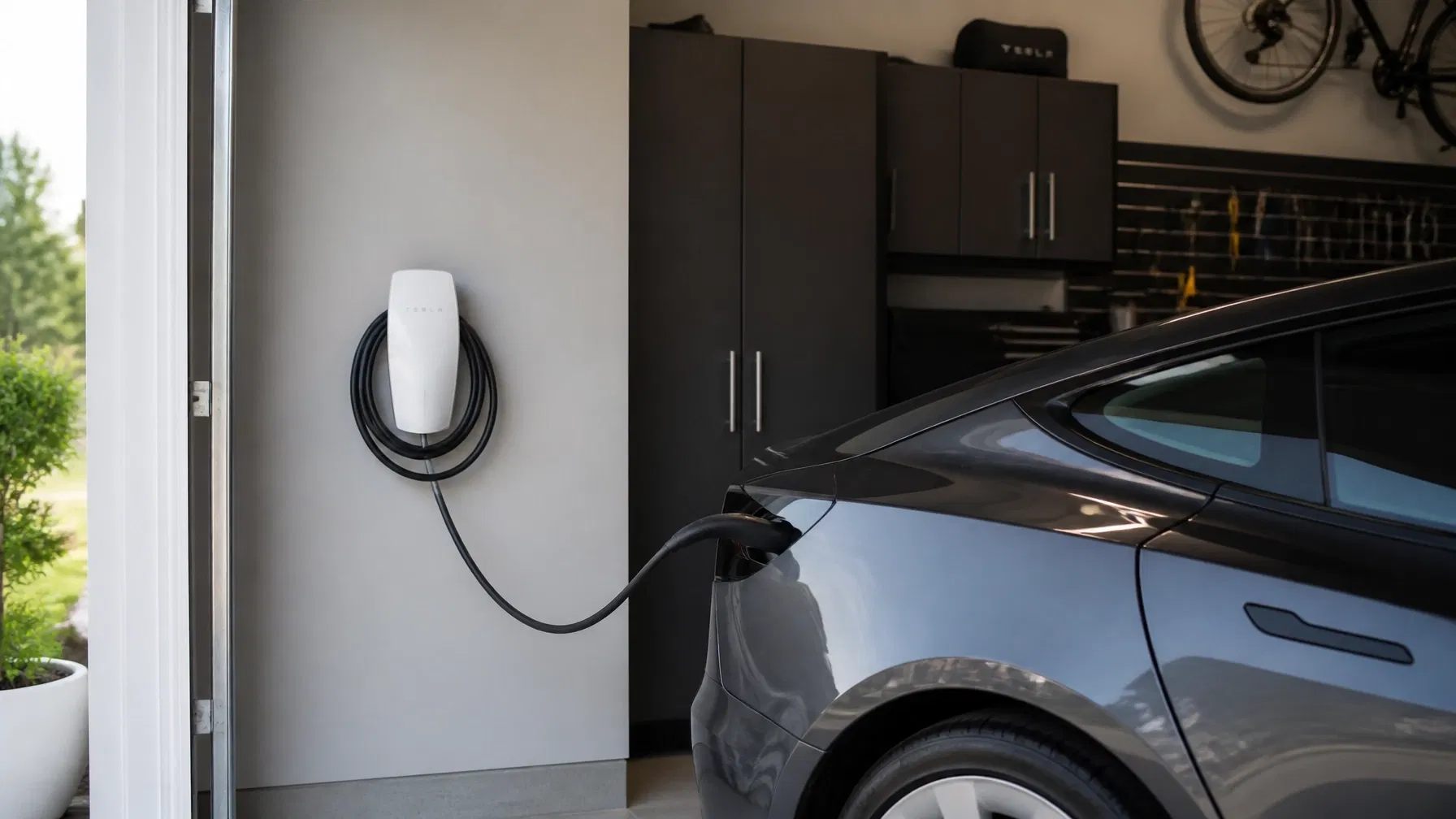
It depends on the model, software, charger, and backup equipment. A standard Tesla Wall Connector installation does not automatically provide vehicle-to-home capability. Confirm compatibility with Tesla and a qualified electrician before purchasing equipment.
Do I need a Powerwall?
Not necessarily. A compatible Cybertruck Powershare setup may provide vehicle-to-home backup through the required Universal Wall Connector and gateway equipment. Powerwall integration and software availability can change, so the current Tesla configuration should be verified for your home.
Can it run my whole house?
Sometimes, but not always. The available output may support many normal household circuits, but electric resistance heat, central air conditioning, electric water heaters, ovens, pool equipment, and other large loads can exceed the system’s capacity. Load management or a critical-load panel may be needed.
What happens if the outage lasts longer than the battery?
The vehicle eventually needs to be recharged. During an extended Dominion Energy or NOVEC outage, you may need to conserve energy, reduce nonessential loads, drive to an available charging location, or use another backup source.
Should my charger be hardwired?
For higher-powered residential Level 2 charging, hardwired installation is generally recommended whenever practical. It avoids depending on a high-current receptacle and provides a more permanent connection. A Tesla Wall Connector installation in Virginia should be designed around the vehicle, panel, wiring route, and future needs.
Planning for the Next Upgrade
Bidirectional charging will change the role of the home EV charger. It can become part of an outage plan, a load-management system, and a larger home-energy strategy.
The technology is promising, but the installation still depends on careful electrical work. Auto Charge Pros helps homeowners across Northern Virginia evaluate charger placement, service capacity, load calculations, permits, inspections, and clean installation details before work begins.
If you are considering a residential EV charging station installation in Fairfax, Loudoun, Prince William, or Fauquier County, visit the Auto Charge Pros website or review the company’s Northern Virginia EV charger installation services. A qualified evaluation can clarify what your current vehicle supports, what your home can handle, and which backup-power options make sense for the long term.