
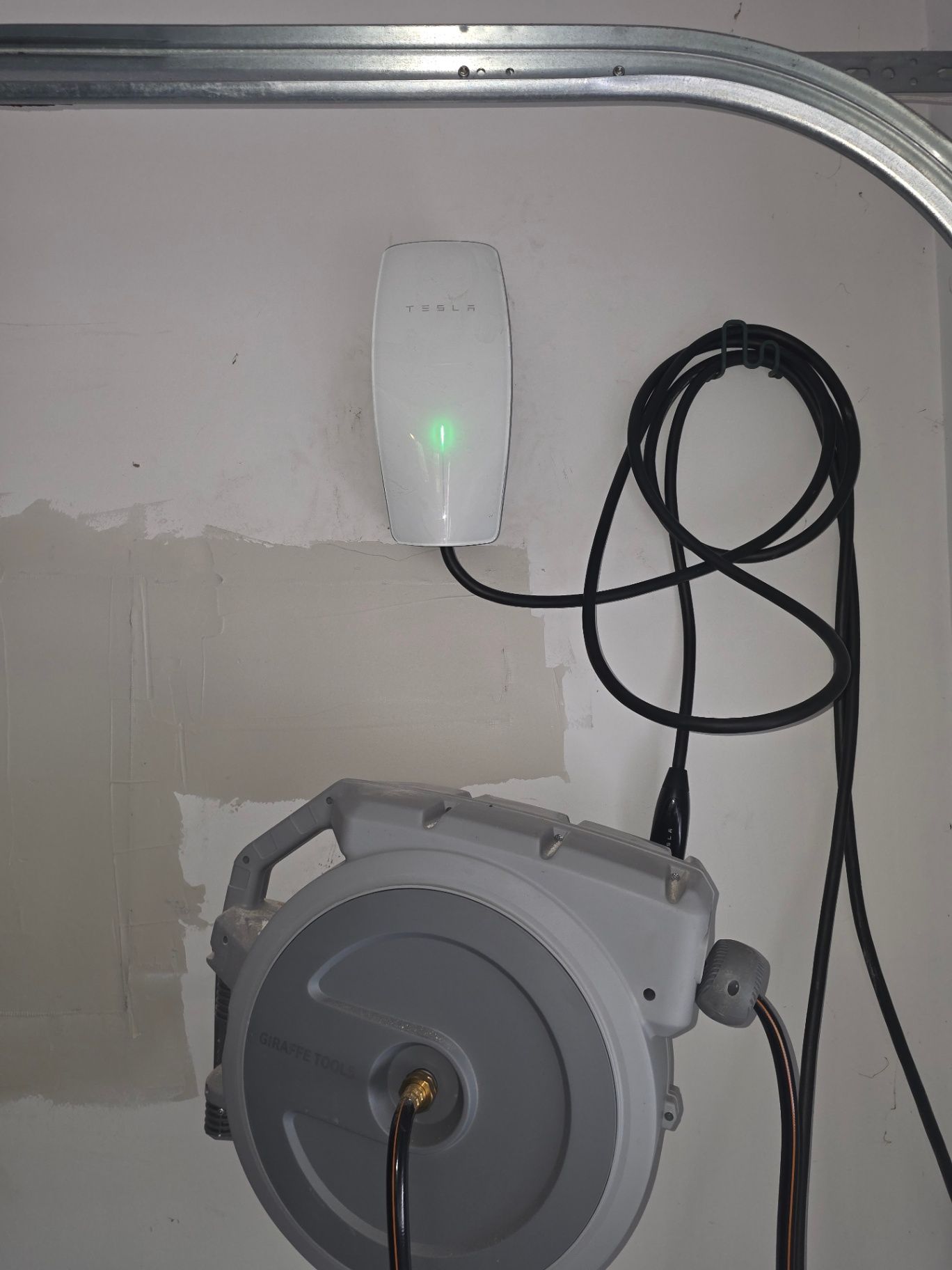
For Northern Virginia homeowners, the choice between a Tesla Wall Connector and a NEMA 14-50 outlet usually comes down to four questions: How quickly do you need to charge, how much flexibility do you want, what will your electrical system support, and how important is a clean finished installation?
Both options can provide reliable Level 2 home charging. However, they are not electrically identical. A Tesla Wall Connector is hardwired directly to a dedicated circuit. A NEMA 14-50 setup uses a receptacle for a plug-in charging device such as the Tesla Mobile Connector.
For most homeowners who want the highest practical charging rate and the cleanest long-term setup, a professionally installed hardwired charger is usually the better choice. A NEMA 14-50 outlet can still be appropriate when portability or future equipment changes are priorities.
Quick Comparison: Tesla Wall Connector vs. NEMA 14-50
| Feature | Tesla Wall Connector | NEMA 14-50 Outlet |
|---|---|---|
| Connection | Hardwired directly to the circuit | Plug-in connection for a compatible EVSE |
| Typical Tesla charging rate | Up to 48 amps when properly configured | Commonly up to 32 amps with a Tesla Mobile Connector |
| Typical circuit | 60-amp, 240-volt dedicated circuit for 48-amp output | Often a 50-amp, 240-volt dedicated circuit |
| Continuous-load planning | 48 amps requires 60-amp circuit capacity | 32 amps fits within the 40-amp continuous limit of a 50-amp circuit |
| GFCI considerations | Integrated ground-fault protection; local requirements still apply | Garage receptacle generally requires GFCI protection |
| Neutral conductor | Often not required for a hardwired Wall Connector | Required for a NEMA 14-50 receptacle |
| Portability | Permanently installed | Can accept a removable plug-in charger |
| Appearance | Cleaner, more streamlined installation | Visible receptacle and charging equipment |
| Best for | Daily charging, higher output, long-term use | Flexibility, portable charging, lower initial scope |
The Main Difference: Hardwired vs. Plug-In Charging
The most important distinction is how the equipment connects to your home’s electrical system.
A Tesla Wall Connector is hardwired. The branch-circuit conductors connect directly inside the unit, eliminating the receptacle and plug as additional connection points. The charger can be configured for the circuit installed by the electrician.
A NEMA 14-50 outlet provides a receptacle that accepts a plug-in charging unit. This can be useful if you want to remove the Mobile Connector later, use it at another property, or preserve the option to replace the EVSE without changing the wiring.
Why EV Charging Is a Continuous Load
Electric vehicle charging is treated as a continuous electrical load because the system may operate for several hours without interruption. Circuit capacity must be planned accordingly.
For example:
- A 48-amp Wall Connector generally requires a 60-amp circuit.
- A 32-amp Mobile Connector on a NEMA 14-50 setup generally requires at least 40 amps of circuit capacity.
- A 50-amp circuit is commonly used for a NEMA 14-50 receptacle because of the receptacle rating and equipment requirements.
The correct breaker, conductor size, wiring method, and charger setting depend on the equipment, run length, installation method, panel terminals, and applicable code. These details should be confirmed through a load calculation and an on-site electrical assessment.
The NEMA 14-50 Outlet Problem: Not Every Receptacle Is Suitable
A NEMA 14-50 outlet may look like a simple range receptacle, but EV charging places a much longer and more demanding load on it than many household appliances.
A low-cost residential-grade receptacle can loosen, overheat, or develop poor contact over time when used for repeated EV charging cycles. This is one reason professional electricians often specify industrial-grade devices from manufacturers such as Hubbell or Bryant when a NEMA 14-50 installation is appropriate.
A proper NEMA 14-50 outlet installation in Northern Virginia should include:
- A dedicated circuit serving the EV charging equipment only
- A properly rated receptacle and enclosure
- Correct conductor terminations and torque
- A breaker compatible with the electrical panel
- Required GFCI protection
- Appropriate mounting height and charger placement
- Permit and inspection coordination where required
The outlet should never be installed as a shortcut around load calculations or circuit design.
GFCI Protection and Nuisance Tripping
GFCI protection is one of the most important differences between these two installation types.
In Northern Virginia jurisdictions such as Fairfax County and Loudoun County, a new NEMA 14-50 receptacle installed in a residential garage will generally require GFCI protection under the locally enforced electrical code. Fairfax County’s electric vehicle charging station guidance also confirms that a permit is required for new EV charging station circuits and outlets.
The practical challenge is that plug-in EV charging can involve multiple layers of ground-fault protection:
- GFCI protection at the circuit breaker
- Ground-fault monitoring built into the charging equipment
- Ground-fault protection built into the vehicle’s charging system
These layers are intended to improve safety, but they can sometimes interact and cause nuisance tripping. A nuisance trip may interrupt charging even when there is no obvious wiring fault. Repeated tripping should never be ignored. It may indicate a loose termination, damaged cord, moisture, equipment incompatibility, or an actual ground-fault condition.
A hardwired Wall Connector avoids the receptacle connection and can simplify the protection arrangement. Wall Connectors also include internal ground-fault monitoring. The exact breaker and protection requirements must still follow the manufacturer’s instructions and the requirements of the local authority having jurisdiction.
Charging Speed: 48 Amps vs. 32 Amps
Charging speed is another major reason homeowners choose hardwired equipment.
A Tesla Wall Connector installed on a properly designed 60-amp circuit can be configured to deliver up to 48 amps, or approximately 11.5 kilowatts at 240 volts. Actual charging speed also depends on the vehicle’s onboard AC charger and battery state.
A Tesla Mobile Connector connected to a NEMA 14-50 outlet is commonly limited to 32 amps. That is approximately 7.7 kilowatts at 240 volts.
For a Northern Virginia commuter driving from Ashburn or Leesburg toward Fairfax, Arlington, or Washington on I-66, the additional output may provide more recovered range during an overnight charging window. A homeowner driving fewer miles each day may find 32 amps completely adequate.
The correct answer is not always “install the largest charger.” The goal is to match charging output to:
- Daily driving distance
- Vehicle battery size
- Available overnight charging time
- Existing household demand
- Electrical-service capacity
- Future EV plans
NACS and SAE J3400: What Changed by 2026?
Tesla’s connector is now part of the SAE J3400 standard, commonly referred to as NACS. This standardization has made the compact Tesla-style connector increasingly common across North American electric vehicles and charging networks.
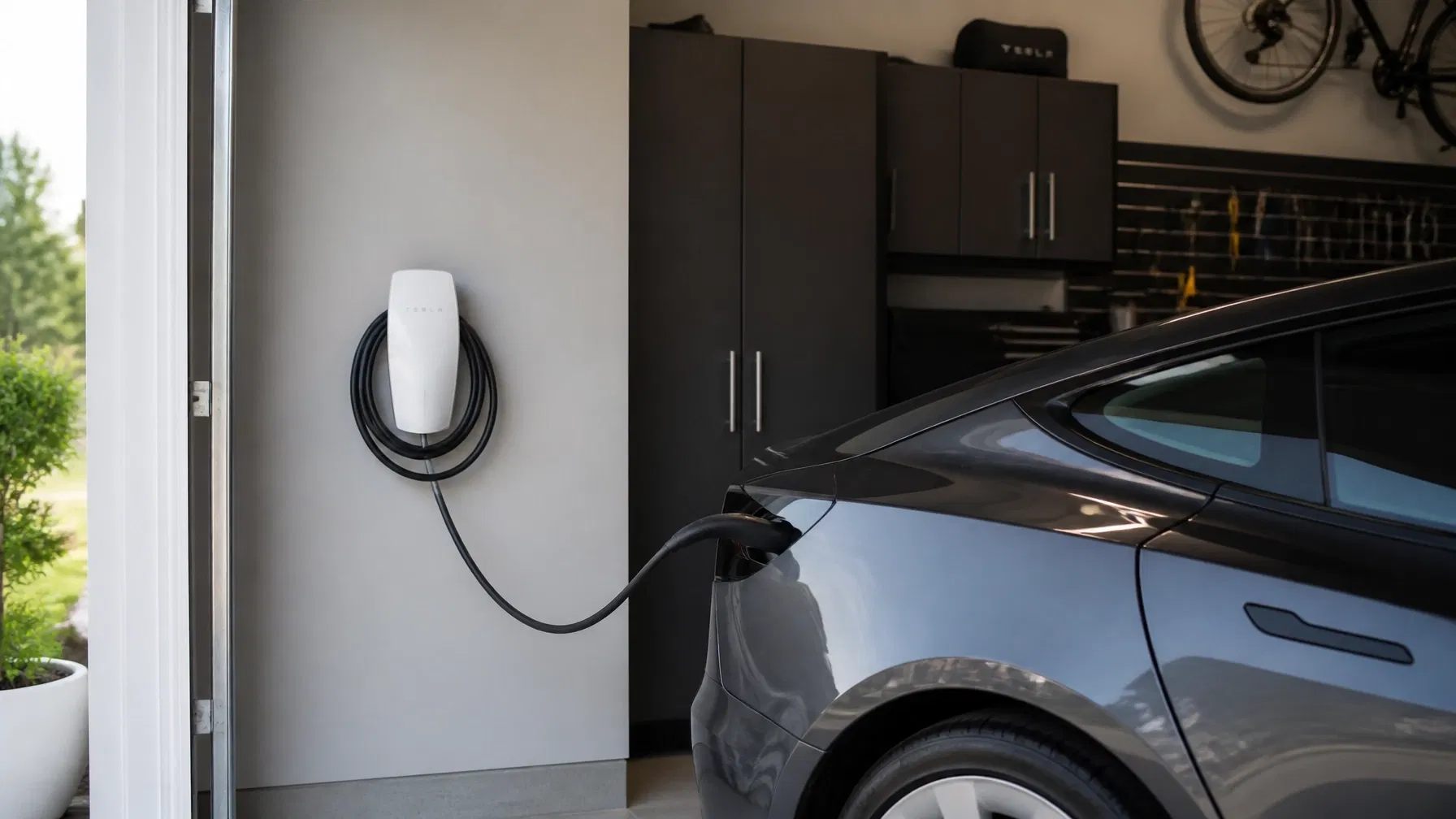
For Tesla owners, a standard Tesla Wall Connector provides a direct connection for vehicles such as the Model 3, Model Y, Model S, Model X, and Cybertruck. The Tesla Universal Wall Connector is especially useful for households with mixed EV brands because it is designed to support Tesla/NACS vehicles as well as compatible vehicles using the J1772 connection through its integrated adapter system.
That makes the Universal Wall Connector a practical option for families that own, or may later purchase, vehicles from Rivian, Ford, Chevrolet, Hyundai, Kia, BMW, Mercedes-Benz, Volvo, or other manufacturers. Vehicle compatibility should always be confirmed before purchase and installation.
Installation Cost: The Gap May Be Smaller Than Expected
Many homeowners assume the NEMA 14-50 option is automatically much less expensive. Sometimes it is, but the difference can be smaller than expected.
A typical residential EV charger installation in Northern Virginia may range from approximately $1,000 to $2,500, depending on wire distance, panel location, charger output, routing difficulty, permitting, and drywall access.
A NEMA 14-50 installation may involve:
- The receptacle itself
- A four-wire circuit that includes a neutral conductor
- An appropriately rated GFCI breaker
- A durable industrial-grade receptacle
- Additional box, enclosure, and termination hardware
The GFCI breaker and associated installation work can add approximately $200 to $300, depending on the panel and project conditions.
A hardwired Wall Connector may require fewer conductors because a neutral is often not needed. Although the Wall Connector may have a higher equipment cost, the overall installation difference can be smaller than homeowners expect.
Aesthetics and Clean Workmanship Matter
The electrical design is only part of a successful home EV charging project. The finished appearance matters too.
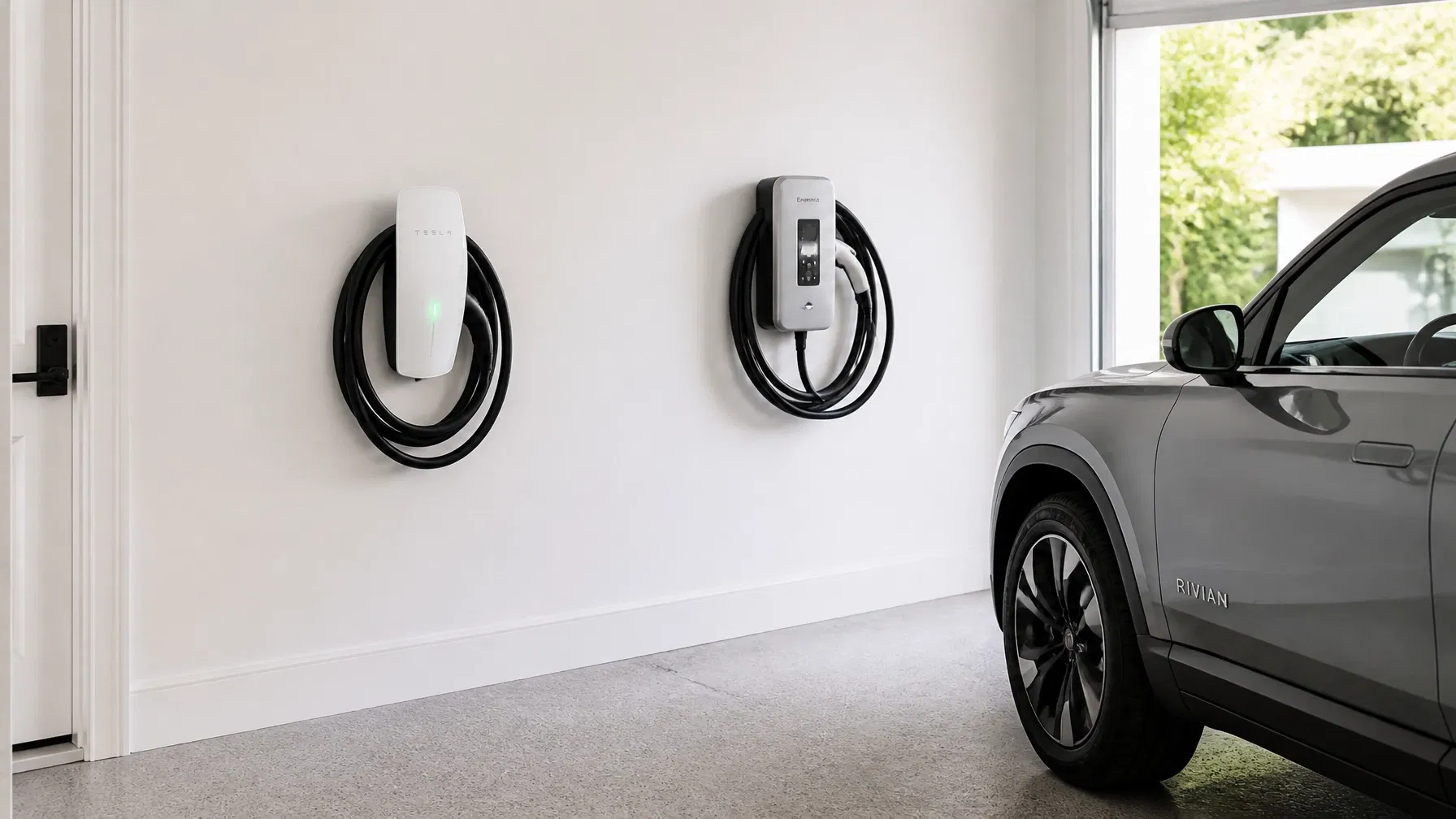
A NEMA 14-50 installation leaves a visible receptacle, plug, charging box, and cable. A hardwired Wall Connector can create a more integrated look, particularly when the wiring is concealed or routed neatly along an approved low-visibility path.
This is important in finished garages, townhomes, and homes in South Riding, Ashburn, Leesburg, and Fairfax where the garage also serves as storage or an entryway.
At Auto Charge Pros, wiring routes are planned to avoid unnecessary drywall damage. When access is needed, we make the smallest practical openings and coordinate patching and finishing after the electrical inspection is complete.
Which Option Should You Choose?
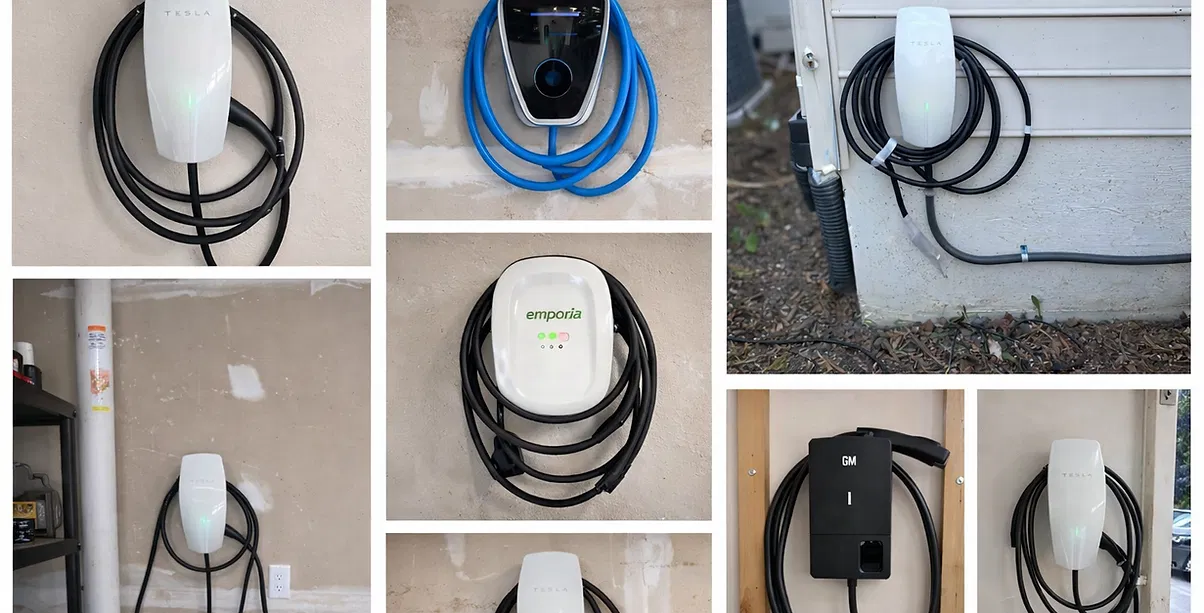
Choose a Tesla Wall Connector if you:
- Drive frequently or need faster overnight recovery
- Want up to 48-amp Level 2 charging when your home supports it
- Prefer a clean, permanent installation
- Want to avoid a high-use receptacle connection
- Are installing a charger for daily, long-term use
- Want a Tesla Universal Wall Connector for a mixed-EV household
Choose a NEMA 14-50 outlet if you:
- Already own a compatible plug-in charging unit
- Want the option to remove or relocate the EVSE
- Prefer equipment portability
- Do not need more than approximately 32 amps
- Have a suitable installation location and electrical capacity
- Understand the additional GFCI and receptacle requirements
For either option, the best first step is a panel review and load calculation. A 100-amp or 200-amp panel does not automatically tell you whether a charger can be added. Existing HVAC equipment, electric water heating, ranges, dryers, hot tubs, and other loads must be considered.
Frequently Asked Questions
Do I need a panel upgrade for a Tesla Wall Connector?
Not necessarily. Some homes can support a charger without an upgrade. Others may need reduced charging output, load management, a subpanel, or a service upgrade. A qualified electrician should complete the load calculation before making a recommendation.
Can I install a Tesla Wall Connector or NEMA 14-50 myself?
Electrical work involving a new 240-volt circuit, panel connections, or garage receptacle should be performed by a qualified electrician. Permits and inspections are generally required for new EV charging circuits in Northern Virginia. DIY work can create safety, insurance, warranty, and resale problems.
How long does installation take?
A straightforward installation may be completed in one day. Longer runs, exterior conduit, panel modifications, permit scheduling, inspection access, or drywall restoration may require additional time.
Is a NEMA 14-50 safer than a hardwired charger?
Neither option is automatically safer when improperly installed. Safety depends on correct circuit sizing, equipment compatibility, conductor terminations, grounding, GFCI requirements, and inspection. For higher-powered residential charging, hardwired installation is generally preferred whenever practical.
Schedule Tesla Charger Installation in Northern Virginia
Auto Charge Pros provides professional Tesla charger installation in Northern Virginia, including Tesla Wall Connector installation, Universal Wall Connector installation, and NEMA 14-50 outlet installation. We serve homeowners in Ashburn, Leesburg, South Riding, Fairfax, Loudoun County, and surrounding communities.
Our process includes panel evaluation, load calculations, careful wiring routes, managed permits and inspections, charger configuration, testing, and cleanup. We focus on safe electrical work and clean finished results without high-pressure upselling.
Request an estimate through the Auto Charge Pros contact page and start planning a reliable home EV charging station installation for your household.